Commercial interior design projects in Colorado Springs often begin with one location and a specific set of business needs. A company finds a space, plans the layout, chooses finishes and furniture, and creates an environment that represents the brand. But when that business grows, the design challenge changes. A second or third location needs to feel connected to the original business while still responding to a completely different space.
At Pasley Commercial Interiors, we've found that thoughtful commercial design can make that transition easier. When branding, interior standards, furniture, and the customer experience are considered together from the beginning, businesses have a stronger foundation for future locations. The goal isn't to make every space identical. It's to create an environment that remains recognizable while adapting to the needs of each location.
When a business has one location, it's easy to think about design as a one-time decision. The space needs to function well, the brand needs to be visible, and employees and customers need to feel comfortable in the environment.
But businesses don't always stay in one location. As teams grow or new markets become available, another location may become necessary. At that point, decisions made during the first project can become much more important.
We've found that businesses benefit from establishing clear design standards early rather than trying to recreate their identity every time they expand.
Questions worth considering include:
A business's brand doesn't stop at its logo or marketing materials. The physical environment is part of that brand too. Reception areas, signage, furniture, finishes, colors, and lighting all contribute to how people experience a business.
This becomes especially important when a company expands. A customer may visit one location and then walk into another months later. The buildings may be different, but the experience should still feel familiar.
That's why we don't believe multi-location design means creating exact copies of the same space. It means identifying the elements that make the brand recognizable and adapting them to each location.
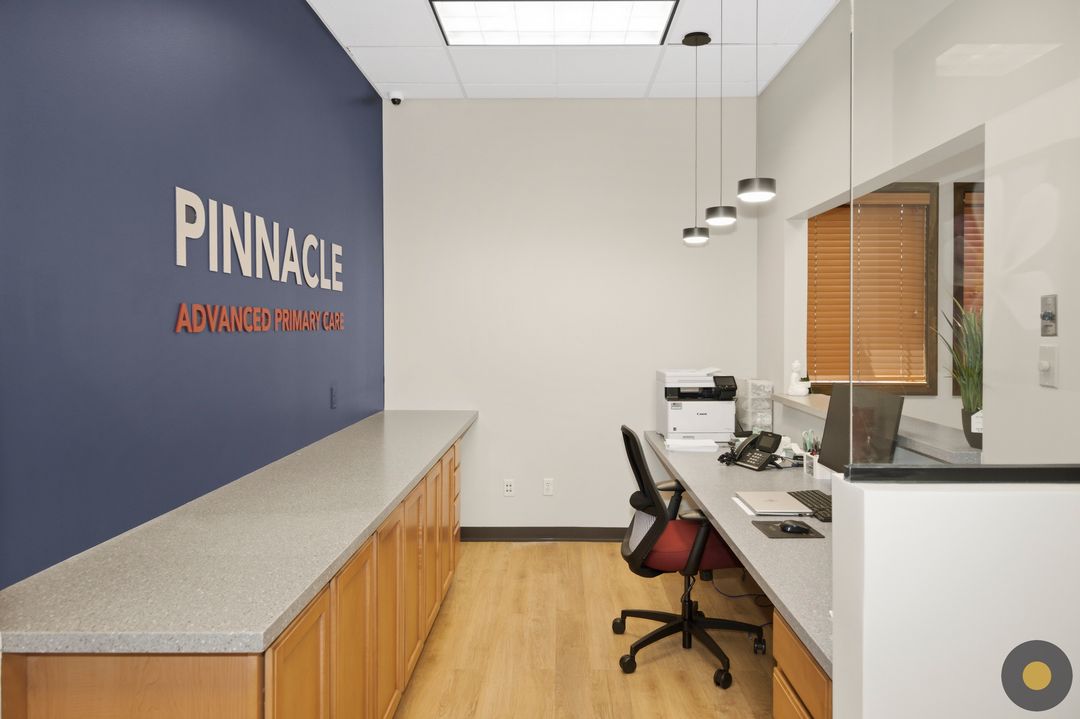
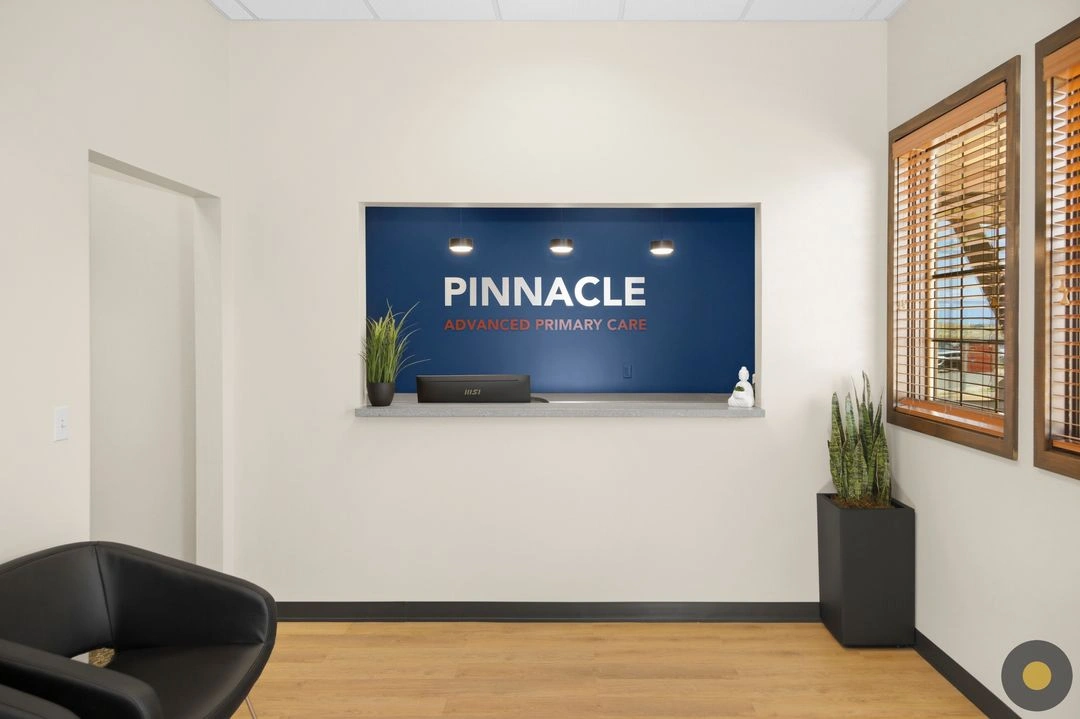
Our work with Pinnacle Advanced Primary Care is one example of this approach. The relationship began with the practice's first office in Cheyenne. The goal was to translate its branding into a physical environment that felt warm, calm, professional, and memorable for patients. At the same time, we wanted to establish design standards that could be carried into future locations.
The project went beyond designing one medical office. We worked with the practice to develop elements including its color palette, logo, signage, and interior design standards. Those decisions created a foundation that could be used as the business expanded.
When Pinnacle later opened locations in Briargate and Centennial, those standards provided a starting point rather than requiring the design process to begin from scratch.
One concern we sometimes hear from growing businesses is that maintaining brand consistency might make every location feel too similar.
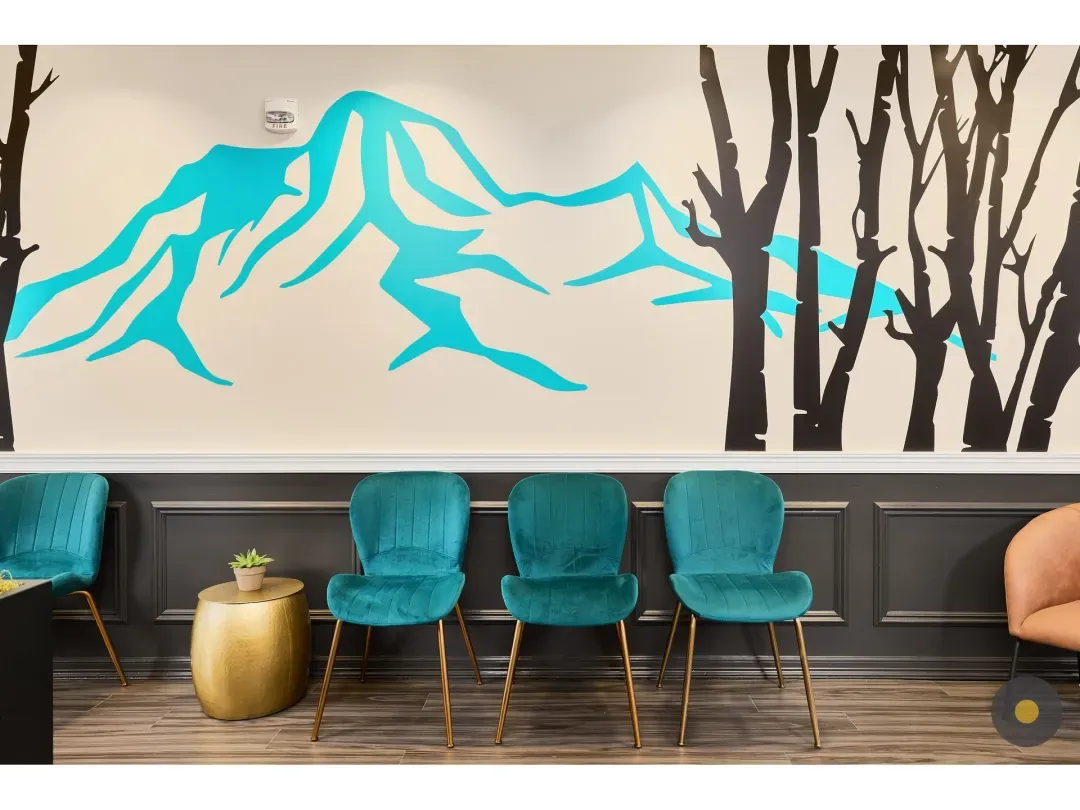
We see it differently. A strong multi-location environment should have a recognizable visual language, but each space still needs to respond to its own building and operational requirements.
For Pinnacle's Centennial location, for example, we transformed a standard medical office suite into a brand-forward clinic that felt calm, professional, and approachable. The established branding provided the foundation, while the individual space required its own solution.
That balance matters. A new location may have a different floor plan, architectural features, or limitations. The design needs to work with those conditions rather than forcing an existing layout into a space where it doesn't belong.
The brand should remain recognizable. The environment should still feel natural.
Growing businesses often have tight timelines when opening new locations. There are leases, construction schedules, furniture, employees, and customers to consider.
Starting the design process from zero can add unnecessary decisions. When a business already has established standards, the team can move forward with greater clarity. Colors, materials, signage, furniture direction, and other brand elements have already been considered.
That doesn't mean every decision has been made. It means there is already a strong starting point. With Pinnacle, the established brand standards helped guide the design and build-out of the additional offices while keeping the spaces connected to the original identity.
We've found that this type of planning becomes especially valuable when businesses grow faster than expected.
Brand consistency is only one part of the equation. A well-designed space still needs to support the people using it. Before carrying design standards into another location, it's important to understand what the new space needs to accomplish.
For example:
Those questions should influence the design just as much as the brand. That's why we approach commercial projects by looking at the business first. The brand provides direction, but the space still has to function for the people who use it every day.
One of the biggest advantages of establishing a strong design foundation early is that it can save a growing business from making the same decisions repeatedly.
When another location comes along, there is already a clearer understanding of:
This doesn't eliminate the work involved in opening a new location, but it can make the process more focused.
The same thinking applies whether a business is expanding within Colorado Springs or moving into Denver, Castle Rock, or another Colorado market. The building may change, but the business's identity shouldn't have to.
Many business owners searching for interior design companies in Colorado aren't simply looking for someone to select finishes or furniture. They're looking for a partner who understands what the space needs to accomplish.
As a business grows, the physical environment needs to support employees, communicate the brand, create a strong customer experience, and remain flexible enough for future changes.
At Pasley Commercial Interiors, our work brings together brand strategy, NCIDQ-certified commercial interior design, and commercial furniture so these decisions work together rather than being treated as separate pieces.
Whether we're working on commercial interior design project in Denver, Castle Rock, or Colorado Springs, we're looking beyond the individual space and considering how it fits into the larger business.
At Pasley Commercial Interiors, we've found that the most valuable commercial design decisions are often the ones that continue helping the business after the first project is finished.
Pinnacle Advanced Primary Care is one example. What began with one office in Cheyenne in the south of Colorado Springs eventually expanded into Briargate on the north side of Colorado Springs, and then into Centennial, Denver. The design standards established early on helped the practice maintain a unified identity while adapting that identity to new spaces. But the principle goes well beyond one medical practice.
For growing businesses, the space should be able to move with the company. Whether in the Colorado Front Range, or another market, thoughtful commercial design can create a stronger foundation for what's next.
When the brand, space, and business goals are considered together, each new location doesn't have to start from scratch. It can become the next part of a much larger story.
The Centennial project involved transforming a standard medical office suite into a space that felt connected to Pinnacle's established brand. The design needed to create a welcoming experience for patients while supporting staff and daily operations. Because the project followed earlier Pinnacle locations, the challenge was also to carry forward recognizable brand elements while adapting them to the specific Centennial, Denver space.
Pasley Commercial Interiors worked with Pinnacle beyond the physical interior by helping develop a broader brand identity. This included elements such as the logo, color palette, signage, and interior design standards. Establishing these elements early gave Pinnacle a more cohesive identity that could be carried across its locations. It also created a foundation for future design decisions as the practice continued expanding into additional communities.
The Pinnacle work involved more than designing a single medical office. Pasley Commercial Interiors was involved in developing the practice's overall visual identity and then applying those standards across multiple locations. The project also required balancing patient experience, staff needs, branding, and practical build-out considerations. This longer-term approach allowed the design to support Pinnacle's growth rather than treating each office as a completely separate project.
PASLEY COMMERCIAL INTERIORS is Colorado's trusted partner for growth-focused commercial interior design. As a woman-owned, NCIDQ-certified firm based in Colorado Springs, we blend spatial branding, client experience design, and turnkey interior solutions that help businesses make powerful first impressions and win their ideal clients. Our direct-to-manufacturer dealership simplifies the commercial furniture procurement process — reducing costs, cutting lead times, and delivering measurable ROI for every client. With deep expertise in workspace strategy, branded environment design, and commercial space planning, we transform business identities into client-converting spaces that inspire loyalty and drive revenue. From boutique and medical aesthetics buildouts to hospitality, multi-family, and franchise commercial projects, PASLEY COMMERCIAL INTERIORS delivers both impactful aesthetics and bottom-line results — because your space should work as hard as you do.
H.B. Pasley, Branding & Business Growth Advisor
616 N Tejon St
Colorado Springs, CO 80903
To request our complete Press Kit, call or schedule a conversation via our Contact Page.


.avif)
