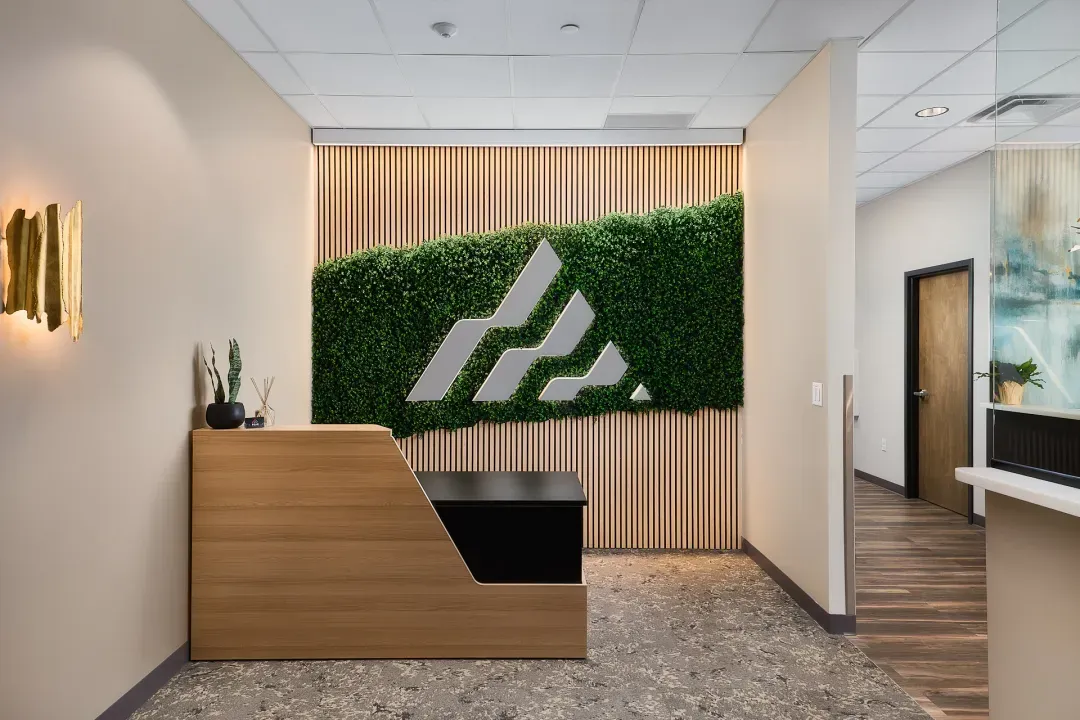
Walk into a business you've never visited before, and you usually start forming an opinion before anyone introduces themselves. The way the space looks, feels, and functions can tell you a lot about the company. For businesses, commercial interior design can be an opportunity to make that first impression feel connected to the brand rather than treating the interior as a separate part of the business.
At Pasley Commercial Interiors, we've found that the strongest commercial spaces are the ones where the brand and the environment make sense together. The colors, furniture, layout, signage, lighting, and materials don't have to match a brand guide word for word. They simply need to communicate the same ideas. When those decisions are made together, the space feels more intentional and more like the business it represents.
Before choosing finishes or furniture, it's worth understanding what the business is actually trying to communicate. A company may want to feel established and professional. Another may want to feel creative, energetic, approachable, or highly specialized. Those qualities can be difficult to communicate through a logo alone. The physical space gives a business another way to tell that story.
We often start by asking simple questions:
The answers help shape the design decisions that follow. That's also why we don't believe that good commercial design starts with a Pinterest board. Inspiration can be useful, but it doesn't tell us why a particular idea belongs in a specific business.
Once the brand direction is clear, the next step is figuring out how it should appear in the physical environment. That can be more subtle than putting a logo on every wall.
Color can become part of the environment. Materials can communicate quality or warmth. Furniture can reinforce the personality of the business. Signage can make the brand easier to recognize. Lighting can change the way a room feels. These details don't need to compete with one another.
We've found that a space usually feels stronger when there is a clear relationship between the different elements. The goal is not to make someone walk into the room and think about the design. The goal is for the space to feel like a natural extension of the business.
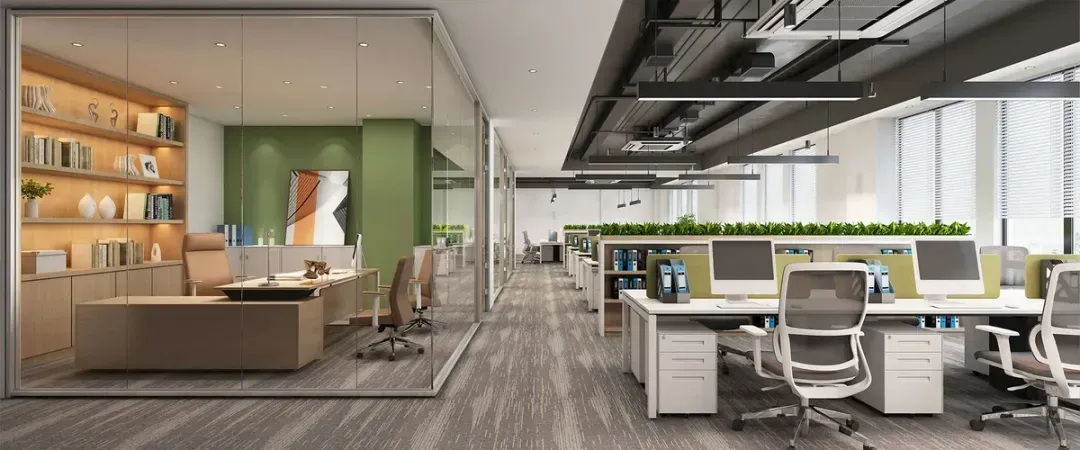
A brand can look great on paper and still fall apart when the space doesn't work.
Imagine a company that wants to communicate collaboration but has a layout where every employee is isolated. Or a business that wants to feel welcoming but has a reception area that is difficult to navigate. The interior needs to support the message.
At Pasley Commercial Interiors, we look at how employees and customers actually move through a space before making design decisions. Our commercial interior design process includes space planning, visualization, furniture, and branding integration because those pieces affect one another. If the business says one thing and the space does another, people notice.
One of the more interesting parts of commercial design is figuring out how much of the brand should be visible. Some businesses benefit from a strong visual statement as soon as someone enters. Others need a quieter approach where the brand appears through materials, furniture, artwork, and smaller details. There isn't one formula.
H.B. Pasley, Branding & Business Growth Advisor at Pasley Commercial Interiors, has emphasized that storytelling is an important part of building a business and that owners need to clarify their story and communicate it throughout their brand. We think the physical space is one of the places where that story can become tangible. The reception area, conference room, waiting area, private offices, and shared spaces can all contribute to the same message without looking like separate branded zones.
Brand identity isn't only about what customers see. Employees spend much more time in the space, so the environment needs to make sense for them as well.
A company that values creativity may need places where people can gather and exchange ideas. A business that relies on focused work may need quieter areas. A company that wants to encourage connection may need spaces that make informal conversations easier. Those decisions become part of the employee experience.
We've found that the best results happen when the brand and workplace are considered together. The space should reflect the personality of the business while still giving people what they need to do their jobs well.
Zane Pasley, Junior Designer at Pasley Commercial Interiors, describes this collaborative approach simply: “I love collaborating with my team to execute the vision.”
That idea is important to our work. A strong commercial environment isn't created by one person making every decision. It comes from bringing the right conversations together and making sure the final space works as a whole.
Furniture is sometimes treated as the last step after the layout and finishes have already been decided. We don't see it that way. The furniture affects how people sit, work, meet, wait, collaborate, and move through the space. It also has a visual impact on the overall environment.
A formal conference table communicates something different from a relaxed collaboration table. A reception chair can make a space feel more welcoming. A workstation configuration can reinforce a company's approach to teamwork.
That's why Pasley Commercial Interiors provides commercial furniture as part of its broader offering. The company works directly with commercial furniture manufacturers, allowing furniture decisions to be considered alongside the design rather than added after the fact.
This becomes even more important for companies with multiple locations. A Denver business may eventually expand into another Colorado market. The new location doesn't need to be a copy of the first one, but customers should still recognize the business.
The same principle applies to companies with different departments or spaces that serve different purposes. A strong brand system gives the design team something to work from without forcing every room to look identical.
Pasley Commercial Interiors specifically works with multi-location businesses to create cohesive, brand-rich design systems while customizing each location to its individual needs. That's a useful distinction where consistency creates recognition and flexibility keeps the space appropriate.
It's easy to become focused on how a space photographs. But commercial interiors are experienced in person.
A client may notice whether the reception area is easy to understand. An employee may notice whether there is somewhere comfortable to have a quick conversation. A visitor may notice the lighting, acoustics, furniture, or wayfinding without consciously thinking about any of those individual details.
We think about those moments throughout the design process. The space needs to work for the people who use it, not just look good in a portfolio. That is one reason Pasley Commercial Interiors begins projects by asking what the business needs its space to do. The answer influences the brand identity, spatial experience, furniture, signage, and lighting that follow.

There is no single look that defines a successful Denver company. A technology company may want a completely different environment from a law firm, healthcare practice, hospitality business, or professional services company.
That is exactly why we don't recommend starting with a particular style. Start with the business. What does it value? Who does it serve? What kind of experience does it want to create? What needs to happen in the space every day?
Those answers provide a much better design starting point. And while our work extends beyond one market, we also provide commercial interior design services in Colorado Springs and Castle Rock, giving businesses in different Colorado communities access to the same business-focused approach.
Businesses looking for commercial interior design firms in Denver should consider more than a firm's portfolio. It's worth asking how the team approaches the relationship between brand and space.
These questions can reveal whether the design process is really connected to the business or simply focused on making the space look attractive.
At Pasley Commercial Interiors, we bring brand strategy, NCIDQ-certified commercial interior design, and commercial furniture together under one team. That means the brand conversation doesn't have to stop when the interior design conversation begins.
Before starting a commercial interior project, it can help to ask:
The answers can help clarify what the space needs to communicate before any major design decisions are made.
Many businesses work with different people for branding, interior design, furniture, signage, and other parts of a commercial project. That can work, but it can also create gaps between the original brand idea and the finished space. We've found that keeping those conversations connected makes it easier to carry the same story from the brand into the physical environment.
That's the approach we take at Pasley Commercial Interiors. We're not trying to make every business look like a Pasley Commercial Interiors project. The goal is the opposite. The finished space should look and feel like that business. Our job is to understand the story, the people, and the goals behind the company and then translate those things into a space that works.
We've found that brand identity becomes much more powerful when people can experience it rather than simply read about it. A website can explain what a company does. A logo can help people recognize it. But the physical environment gives clients and employees another opportunity to experience what the business stands for.
For companies, commercial interior design can be more than a layout, furniture selection, or renovation project. It can be a way to bring the company's identity into everyday interactions.
Whether we're helping a business in Denver, providing services in Colorado Springs and Castle Rock, or working with a company in another Colorado market, we start with the same question:
What does this business need its space to say? Once that answer is clear, the design has somewhere meaningful to begin.
A commercial space can communicate a brand through much more than a logo. Colors, materials, furniture, lighting, signage, artwork, layout, and even the way people move through the space can contribute to the overall message. The important part is making those elements work together. When the physical environment reflects the company's personality and values, visitors and employees can experience the brand in a more natural way.
Not necessarily. Businesses with multiple locations can benefit from consistent brand elements without making every space identical. The building, floor plan, market, and daily operations may require different solutions. A clear brand foundation gives the design team recognizable elements to carry forward while allowing each location to respond to its own circumstances. This creates consistency without making the spaces feel repetitive or disconnected from their surroundings.
Look for a team that wants to understand the business before recommending design solutions. A strong commercial design process should consider branding, space planning, employee needs, customer experience, furniture, and future requirements together. It can also help to ask whether the firm has experience translating different brand identities into physical spaces. The right relationship should feel collaborative rather than simply transactional.
PASLEY COMMERCIAL INTERIORS is Colorado's trusted partner for growth-focused commercial interior design. As a woman-owned, NCIDQ-certified firm based in Colorado Springs, we blend spatial branding, client experience design, and turnkey interior solutions that help businesses make powerful first impressions and win their ideal clients. Our direct-to-manufacturer dealership simplifies the commercial furniture procurement process — reducing costs, cutting lead times, and delivering measurable ROI for every client. With deep expertise in workspace strategy, branded environment design, and commercial space planning, we transform business identities into client-converting spaces that inspire loyalty and drive revenue. From boutique and medical aesthetics buildouts to hospitality, multi-family, and franchise commercial projects, PASLEY COMMERCIAL INTERIORS delivers both impactful aesthetics and bottom-line results — because your space should work as hard as you do.
H.B. Pasley, Branding & Business Growth Advisor
616 N Tejon St
Colorado Springs, CO 80903
To request our complete Press Kit, call or schedule a conversation via our Contact Page.




.avif)
